

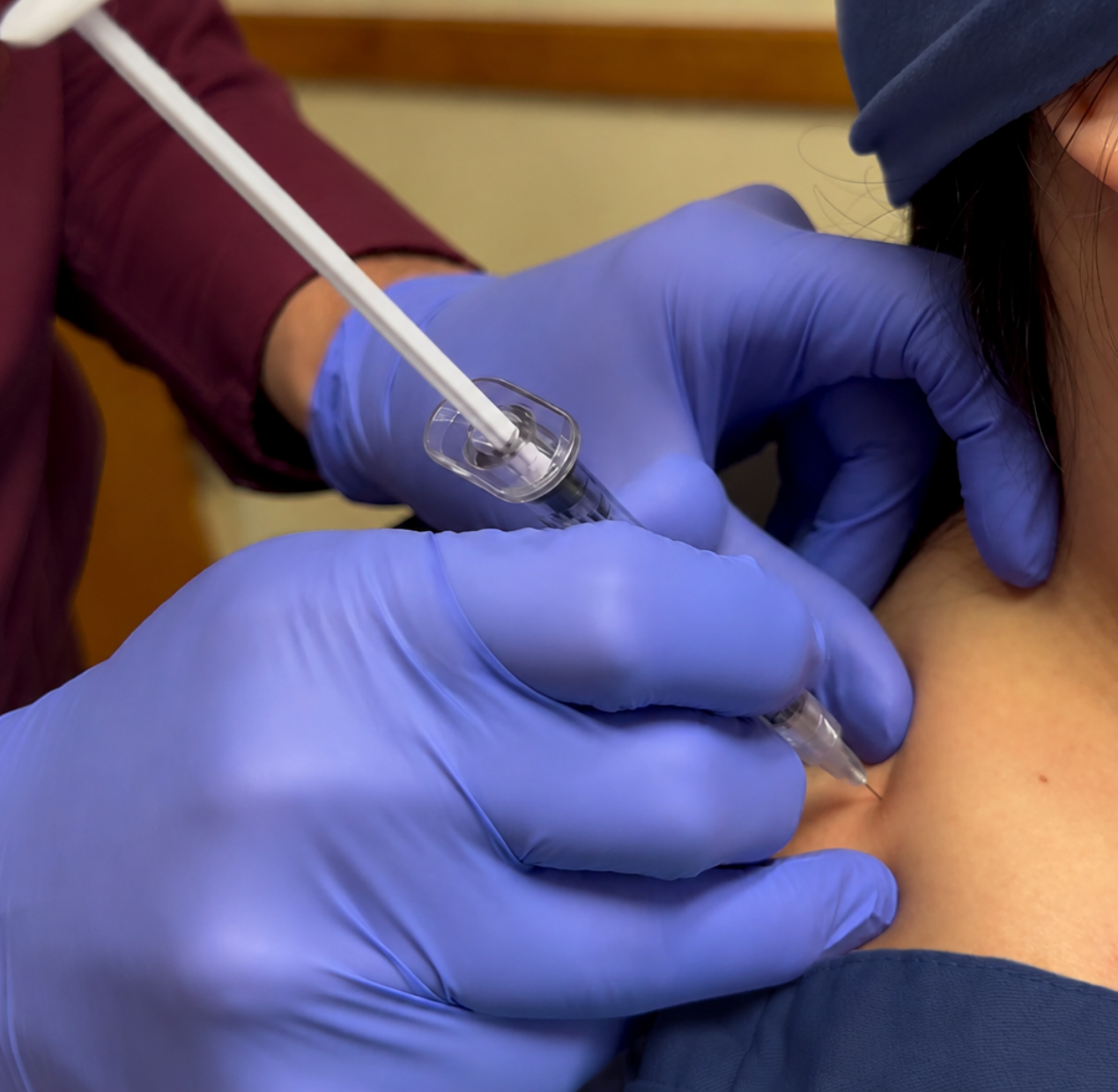
Trigger Point Injection
A trigger point is a tight, sensitive area within a muscle that can cause pain and discomfort. Trigger point injections use a local anesthetic, and sometimes a small amount of steroid, to relax the muscle, reduce pain, and improve movement. These injections are commonly used for pain in the neck, shoulders, and back.
Trigger point injections are a safe and effective treatment for myofascial and musculoskeletal pain. They help relieve discomfort, improve mobility, restore function, and reduce the need for pain medications.
A Trigger Point Injection is a minimally invasive procedure used to relieve muscle pain, tightness, and inflammation caused by trigger points or “muscle knots.” The injection delivers medication directly into the affected muscle to help reduce pain and improve muscle function.
Trigger Point Injections are commonly used to treat chronic muscle pain, tension headaches, neck pain, shoulder pain, upper and lower back pain, and muscle spasms caused by stress, injury, or overuse.
At AHBA, Trigger Point Injections are performed to help relieve muscle tension, improve mobility, and restore daily function. Our goal is to provide targeted pain relief safely and effectively while helping patients return to their normal activities with greater comfort and flexibility.
Relieve Muscle Knots, Restore Comfortable Movement
Trigger point injections (TrPi) are a therapeutic modality to treat myofascial trigger points, especially in symptomatic patients, and have been demonstrated effectiveness to inactivate trigger points. They are believed to cause a temporary relaxation of the taut muscle cord, which in turn allows for improved perfusion, ATP replenishment to release the actin-myosin chains causing lengthening of the muscle fiber, along with removal of metabolite waste. These factors assist in breaking the pain-tension cycle.
Indications for trigger point injections include an identifiable palpable tender area that produces a referred pain pattern. Common concomitant symptoms include chronic or episodic headaches, temporomandibular joint pain, back pain, decreased range of motion secondary to trigger points, and groin pain.
Benefits of Trigger Point Injections
Precise Pain Relief
Enhances Range of Motion
Support to release the muscle tightness that can help to restore normal movement patterns of the affected muscles.
Enhances Mobility and Muscle Function
Supports recovery of normal muscle mechanics, improving strength, coordination, and overall function
Provides Relief from Cycles of Pain
Provides long-term relief from the chronic muscle contractions and pain
Alternative Non-surgical Pain Management
Provide alternative options for individuals who opt for a non-surgical procedure, as this procedure can be performed on an outpatient.
Supports Combined Therapies
Enhances the effectiveness of other therapies, including physical therapy, rehabilitation, and other personalized pain management care.
Reduces the Dependence for Pain Medications
Helps decrease reliance on oral pain medications, minimizing the risks associated with prolonged pharmacologic therapy.
Conditions That Can Be Treated with Trigger Point Injections
At AHBA, our approach to Trigger Point Injection (TrPI) focuses on accurate diagnosis and targeted treatment of myofascial pain. By combining clinical expertise with minimally invasive techniques, we aim to restore comfort, improve mobility, and support long-term musculoskeletal health.
Masseter
(a muscle in your jaw).
Levator scapulae
(a muscle on the sides of your neck).
Gluteus medius
(a muscle in your hip)
Trapezius
(the muscle extending over the back of your neck and shoulders)
Sternocleidomastoid
(a muscle in the front of your neck)
Temporalis
(a muscle on the sides of your head)
Procedure Process of Trigger Point Injection
| Pre-Procedure | During the Procedure | Post-Procedure | Possible Side Effects | At-Home Care |
|---|---|---|---|---|
|
Before the injection, your doctor will explain the procedure and answer any questions you may have. Your consent will be confirmed, and you will be prepared in a clinical setting with trained staff. Your vital signs may be checked, and in some cases, a small cannula may be placed in your hand. Please bring your glasses if needed for reading, bring a list of your current medications, and continue taking your usual medications on the day of treatment. |
You will be positioned comfortably, and the skin around the injection site will be cleaned with an antiseptic solution, which may feel cold. The doctor will identify the tender areas by gently pressing on the skin and will let you know just before the injections are given. As the injections are administered, you may feel pressure, tightness, or a pushing sensation. If you experience any discomfort, it is important to inform your doctor immediately.
|
After the injections, you will be monitored in a recovery area by nursing staff. Your vital signs may be checked, and you will receive discharge instructions before going home, usually within a few hours. Please arrange for someone to drive you home, as it is not safe to drive after the procedure. For the first 24 hours, avoid driving, operating machinery, signing legal documents, drinking alcohol, or performing activities that require full alertness until you feel fully recovered. |
Side effects are usually mild and may include temporary soreness, tenderness, or bruising at the injection site. Rarely, local anesthetic may enter a blood vessel and cause dizziness, ringing in the ears, a metallic taste, or blurred vision, and you should inform your doctor immediately if this occurs. Infection is uncommon but may cause redness, warmth, or feeling unwell. In rare cases, steroid injections may lead to skin dimpling, discoloration, or temporary changes in vision.
|
You may experience temporary soreness at the injection site. Keep the area dry for 24 hours, continue taking your usual medications, and avoid strenuous activities. It is normal for pain to briefly worsen before improving. As symptoms improve, gradually return to your normal activities and exercise. |
Release Muscle
Pain Naturally
Precision trigger point injections designed to ease tension and improve daily mobility.