

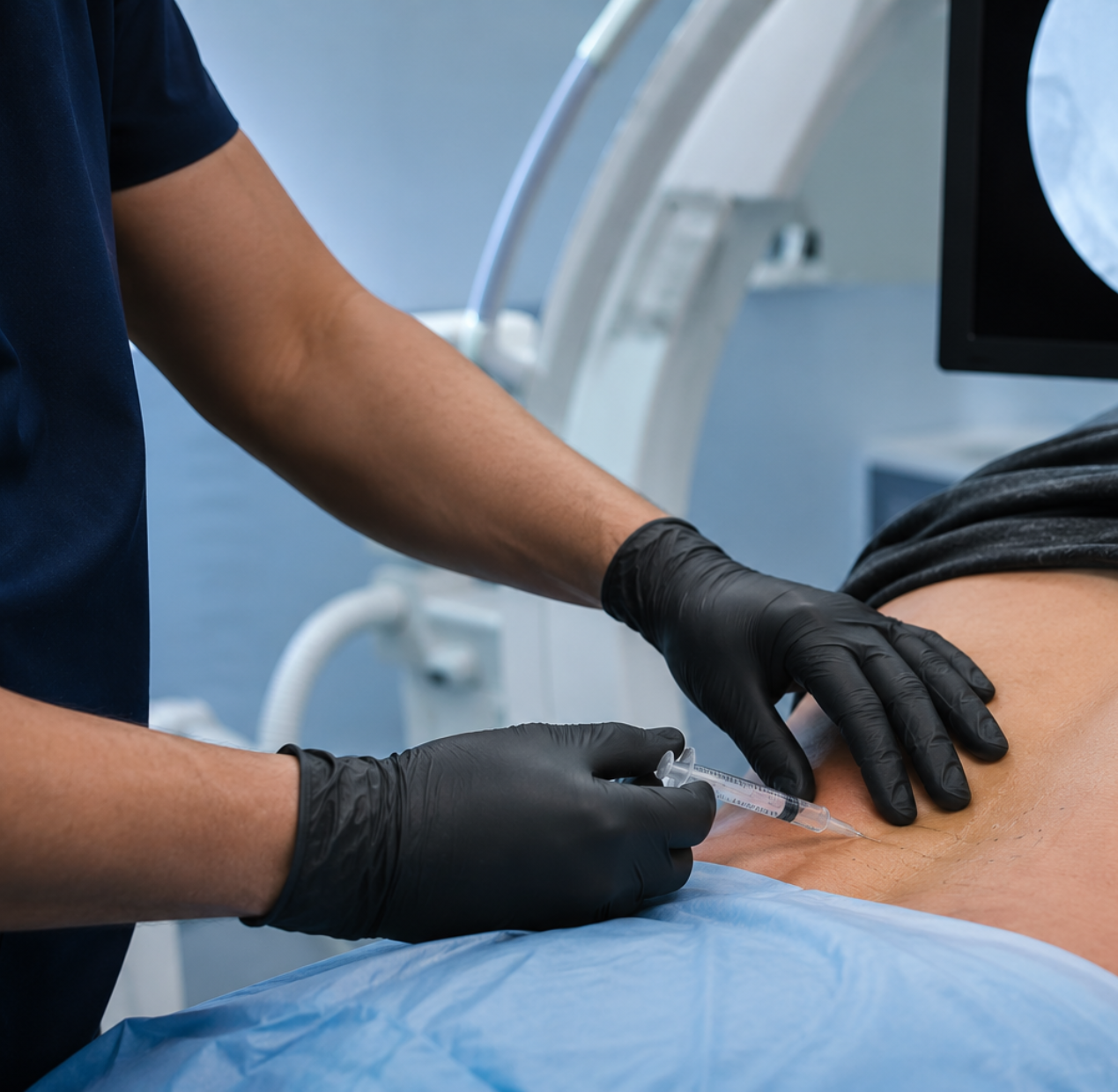
Transforaminal Epidural Steroid Injection
Back pain can interfere with daily function, limiting both routine and physical activities. When persistent, it may affect not only the lower back but also the movement and strength of the lower extremities. Even simple activities, such as walking, bending, or sitting, can become increasingly difficult, reducing overall quality of life.
A Transforaminal Epidural Steroid Injection (TFESI) is a minimally invasive procedure used to relieve inflammation and nerve pain in the spine. During the procedure, a steroid medication is injected near the affected spinal nerve root to help reduce pain, swelling, numbness, and irritation caused by compressed nerves.
TFESI is commonly used to treat conditions such as herniated discs, sciatica, spinal stenosis, pinched nerves, degenerative disc disease, and chronic neck or lower back pain that radiates into the arms or legs. It is often recommended for patients experiencing nerve-related spinal pain.
Most patients can return to normal activities within 24 hours after the procedure. Mild soreness at the injection site may occur temporarily. Pain relief can begin within a few days and may last for weeks or months depending on the condition being treated and the patient’s response to the injection.
Back Pain affects
more than your Spine
Lumbar pain, commonly referred to as “back pain,” is one of the most common musculoskeletal conditions. It can be from a variety of causes, including trauma, repetitive strain, degenerative changes, or inflammatory processes. Over time, these factors can lead to nerve root irritation or compression, resulting in pain that is often described as dull, sharp, or stabbing, and may radiate down the legs, a hallmark of lumbar radiculopathy or sciatica.
Benefits of Transforaminal Epidural Steroid Injection
-
Delivers medication directly to the affected nerve root, effectively reducing inflammation and relieving pain at its source.
Precise Pain Relief
-
Support to address the exact nerve responsible for symptoms, allowing for more focused and effective treatment while minimizing unnecessary interventions.
Detects the cause of Pain
-
It supports providing relief for more than a week to several months, which can help to resume engaging in physical activities and restoring normal movement patterns.
Enhance Function and Mobility
-
Provides an effective alternative to surgery, particularly for patients seeking conservative management or those not suitable for operative treatment.
Alternative Non-Surgical Management
-
Helps decrease reliance on oral pain medications, minimizing the risks associated with prolonged pharmacologic therapy.
Lessen the Risk for Long-Term Pain Medications
Conditions That May Benefit from Transforaminal Epidural Steroid Injections
Sciatica (Lumbar Radiculopathy)
Herniated or bulging discs
Spinal and Foraminal Stenosis
Degenerative disc disease
Spondylolisthesis
Procedure Process of
Epidural Steroid Injection
| Pre-Procedure | During the Procedure | Post-Procedure and Recovery |
|---|---|---|
|
Before the procedure, your provider will perform a detailed evaluation to ensure the treatment is safe and appropriate for your condition. This includes reviewing your medical history, symptoms, pain levels, physical function, and any previous imaging such as X-rays, CT scans, or MRIs. Your provider will identify the affected joint, discuss whether the procedure is right for you, and explain the benefits, risks, and expected outcomes. |
On the day of your procedure, your provider will review your pain level, vital signs, and perform a brief physical assessment. During the procedure, you will lie comfortably while the injection site is cleaned and numbed with a local anesthetic. Using image guidance, a fine needle is carefully placed into the targeted area, and medication is injected to reduce inflammation and relieve pain. The procedure typically takes 20–30 minutes.
|
After the procedure, you will be monitored briefly while your condition and vital signs are reassessed. Mild soreness or temporary discomfort at the injection site is common and can usually be managed with a cold compress and light activity modification. Your provider will give you post-procedure care instructions, including how to care for the injection site, when to resume normal activities, and guidance to support your recovery and mobility. |
Release Muscle
Pain Naturally
Precision trigger point injections designed to ease tension and improve daily mobility.