

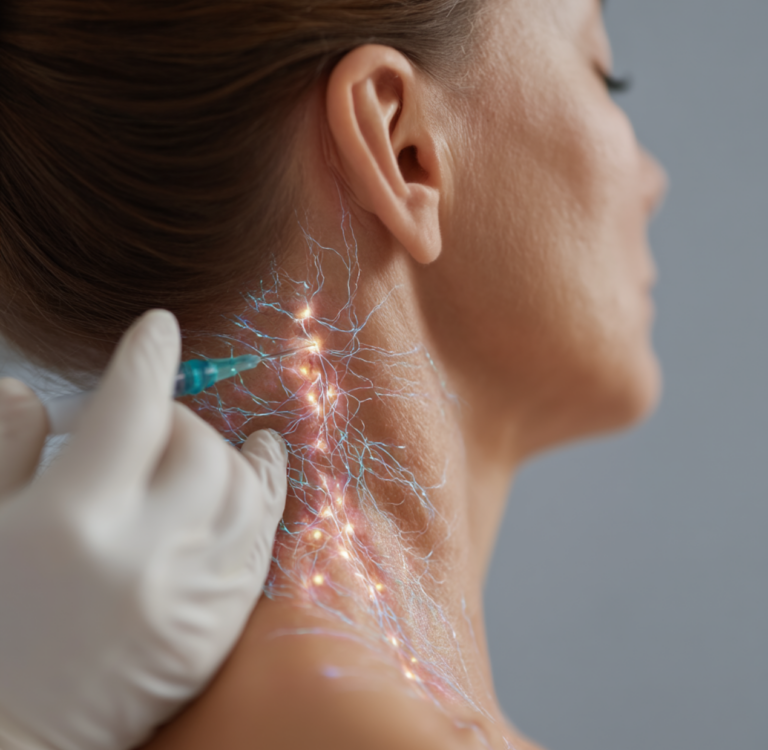
Ganglion Block
Ganglion blocks are specialized procedures that target the sympathetic nervous system to help manage chronic pain and certain nerve-related conditions. By injecting medication around specific sympathetic ganglia, these blocks interrupt pain signals and reduce abnormal nerve activity that may contribute to persistent pain, inflammation, or hypersensitivity.
Originally developed over a century ago for pain relief, ganglion blocks are now commonly used to treat conditions such as Complex Regional Pain Syndrome (CRPS), postherpetic neuralgia, hyperhidrosis, and other chronic pain disorders. In some cases, the benefits may last longer than the medication itself by helping calm overactive pain pathways and reducing nervous system hyperexcitability. These procedures can also support improved function, comfort, and quality of life as part of a comprehensive pain management plan.
Benefits of Ganglion Blocks
Delivers medication directly to sympathetic nerves involved in chronic pain and nerve-related conditions.
Targeted Pain Relief
Helps calm overactive nerve activity and may decrease burning, tingling, or hypersensitive pain symptoms.
Reduced Nerve Hypersensitivity
Can promote better circulation in affected areas by reducing abnormal sympathetic nerve responses.
Improved Blood Flow and Circulation
In some cases, pain relief may continue beyond the duration of the medication by interrupting abnormal pain signaling pathways.
Longer-Lasting Relief
Performed using image guidance and small needles without the need for surgery.
Minimally Invasive Treatment
May help patients participate more comfortably in rehabilitation, daily activities, and physical therapy.
Improved Function and Mobility
Can lessen the need for systemic pain medications, including opioids.
Reduced Dependence on Oral Medications
Helps identify whether the sympathetic nervous system is contributing to a patient’s pain while also providing treatment.
Diagnostic and Therapeutic Value
Commonly used for conditions such as Complex Regional Pain Syndrome, postherpetic neuralgia, vascular pain syndromes, and certain autonomic disorders.
Supports Management of Multiple Conditions
Conditions Treated
Chronic Neuropathic Pain
Complex regional pain syndrome
Chronic nerve pain
Post surgical nerve pain
Phantom limb pain
Sympathetic Nervous System Disorders
Sympathetically maintained pain
Vascular insufficiency related pain
Raynaud type symptoms
Head, Neck, and Facial Pain
Chronic migraines
Cluster headaches
Facial pain syndromes
Trigeminal neuralgia
Procedure Process of
Ganglion Block
| Pre-Procedure | During the Procedure | Post-Procedure |
|---|---|---|
Before a ganglion block, the provider will review your medical history, symptoms, medications, allergies, and previous treatments. Imaging studies and a physical examination may be performed to identify the appropriate sympathetic ganglion to target. Patients may receive instructions regarding fasting, medication adjustments, or arranging transportation after the procedure. The treatment plan will be discussed to ensure the procedure is safe and appropriate for your condition. |
During a ganglion block, the patient is positioned comfortably while the treatment area is cleaned and prepared using sterile technique. Using imaging guidance such as fluoroscopy or ultrasound, the provider carefully places a needle near the targeted sympathetic ganglion and injects medication to interrupt abnormal pain signaling and nerve activity. The procedure is typically brief and designed to provide targeted relief while minimizing discomfort. Patients are usually awake throughout the treatment, although mild sedation may sometimes be provided for comfort. |
After the procedure, patients are monitored for a short recovery period to assess their response and ensure stability. Temporary numbness, warmth, weakness, or mild soreness near the injection site may occur and generally resolves within a short time. Many patients notice reduced pain, improved circulation, or increased comfort following treatment. Providers may recommend activity modifications, physical therapy, or follow-up care depending on the condition being treated. The duration of relief varies from patient to patient and may improve with a series of treatments as part of a comprehensive pain management plan. |
Release Muscle
Pain Naturally
Precision trigger point injections designed to ease tension and improve daily mobility.